All About Halloumi: Cyprus’s Famous Squeaky Cheese

Written by: Irene Matys

Halloumi, known as the squeaky cheese, has become a beloved staple around the world, and for good reason. Its satisfying texture, high melting point, and unique salty tang make it one of the most versatile cheeses. But beyond its taste and texture lies a rich cultural heritage that’s deeply rooted in the island of Cyprus.

Let’s go back in time to learn more about this iconic cheese, how it’s made, how to enjoy it, and how to store it.

The Origins of Halloumi

Halloumi is a traditional Cypriot cheese, semi-hard and is made from a blend of goat’s and sheep’s milk. Unlike most cheeses, Halloumi is not made with acid-producing bacteria, but instead with non-animal rennet, a complex set of enzymes that curdles the milk. This unique process, along with its high protein content, is what gives Halloumi its signature squeak when you bite into it.

Traditionally, raw Halloumi was preserved in its own brine and wrapped with fresh mint leaves, which helped to keep it fresh and added a burst of cooling flavour. Today, Krinos, continues to preserve it in its own brine and use mint as a nod to this tradition.

On March 30, 2021, Halloumi earned Protected Designation of Origin (PDO) status from the European Union. This was a historic milestone for Cyprus. This means that only cheese made in Cyprus under specific traditional methods can be sold as Halloumi within the EU. A proud moment for the island and its people!

Taste & Texture

When made traditionally with goat and sheep’s milk, Halloumi has a tangy, briny flavour and a dense, chewy texture. Eaten raw, it’s firm and slightly rubber, perfectly refreshing in a summer breakfast alongside watermelon. But when you pan fry or grill it, magic happens: the outside turns golden and crisp, while the inside becomes soft and creamy, without ever melting.

Delicious Ways to Enjoy Krinos Halloumi

Thanks to its versatility, Halloumi can be used in countless dishes—from traditional to modern. Here are just a few ideas but the ideas are endless.

Raw: Sliced and served with watermelon or in sandwiches with tomato and cucumber.

Pan-fried or Grilled: Enjoy hot with a drizzle of honey or grape syrup for a sweet twist, or with lemon and oregano for savoury.

Grated: Over pasta, in omelettes, béchamel sauces, or in savoury pies and gratins.

Creative Uses: Toss it into salads, stuff it in tacos, layer it on burgers or pizza, bake it into breads, or coat it in sesame seeds or breadcrumbs and roast until golden on the outside and soft and creamy on the inside.

In Cyprus, you’ll often find it served with loukaniko or lountza (traditional Cypriot sausage and smoked pork loin) for breakfast or as part of a meze platter and even in the famous Grilled Halloumi and Lountza sandwich, accompanied by wine, cold beer, or a shot of zivania (a Cypriot spirit).


How to Store Halloumi

One of Halloumi’s hidden talents is its long shelf life when stored properly. Here’s how to keep your Krinos Halloumi fresh:

Unopened: Store in the refrigerator for up to one year.

Opened: Keep in an airtight container in the fridge for up to two weeks.

Frozen: Halloumi can be frozen for up to 6 months. To thaw, leave it overnight in the refrigerator.

Less Salty Tip: Halloumi is naturally salty due to its brine. For a milder flavour, rinse it in cold water, pat dry with a lint-free cloth, or soak it in water for an hour and pat dry before using.


How to Cook Halloumi

Pan-Fried Halloumi

Pan-frying brings out the golden crust and gooey centre we all love.

Instructions:

1.  Slice Krinos Halloumi into ¼ or ½-inch thick pieces.

2. Heat a non-stick pan over medium-high heat (no oil needed!).

3. Fry each slice for 2–3 minutes per side until golden and crisp.

4. Remove and enjoy immediately.


Grilled Halloumi

Perfect for summer barbecues or indoor grilling.

Instructions:

1. Slice into ½-inch thick pieces.

2. Preheat grill or grill pan over medium-high heat.

3. Lightly oil the grill to prevent sticking.

4. Grill Halloumi for 1–2 minutes per side, until grill marks appear and it’s slightly softened.

5. Remove and enjoy immediately.


Warm Lemony Pasta with Fresh Mint and Grated Halloumi Cheese

Serves 4


Ingredients

450 g gemelli pasta

5 1/2 cups water

2 vegetable bouillon cubes or 2 tablespoons of vegetable bouillon paste

1/2 tsp sea salt

Juice of 1 medium lemon, 1/3 cup of lemon juice

1/4 cup of fresh mint finely chopped or 3 tbsp dried mint

1 cup or more grated halloumi cheese


In a large pot, add 5 1/2 cups of water and vegetable bouillon cubes. Bring to a boil and stir to dissolve bouillon cubes. Season with salt and add in pasta.

Cook pasta for 8-10 minutes until al dente and broth has slightly thickened. Turn off heat and stir in lemon juice and mint.

Plate and top with a generous amount of grated halloumi cheese. Serve immediately while hot.


Tip

Add in leftover roast chicken for protein for an even more fulfilling meal.


Click here to find out where to buy Krinos PDO Halloumi near you 


MORE HALLOUMI RECIPES:


Krinos Canada Proudly Sponsors Rising Star Athlete & U16 Canadian Alpine Ski Team Member, Elena Deda.

At Krinos Canada, we believe in the power of heritage, passion, and perseverance—and few stories embody that spirit more than that of Elena Deda, the 16-year-old alpine skiing sensation and proud member of the Canadian National Alpine Ski Team.

We are thrilled to announce our official sponsorship of Elena, a rising star whose dedication to excellence—on and off the slopes—is nothing short of inspiring. Born in Northern Greece and raised in Vancouver, Elena began skiing at the age of three and has been making tracks toward greatness ever since. A  B.C. Provincial Champion and reigning Western Canadian Overall Champion for both 2024 and 2025, her achievements reflect the same values that drive everything we do at Krinos: pride in your roots, relentless effort, and a bold vision for the future.

Elena is also a standout scholar, having earned the prestigious Piper Award for academic excellence in grades 8 and 9—a testament to her discipline and drive.

“Elena’s journey is a shining example of how cultural roots and personal ambition can come together to achieve extraordinary things,” says Alexander Georgiadis, President of Krinos Canada. “We are proud to support her as she carries the strength of Greek-Canadian identity onto the world stage.”

This partnership is more than a sponsorship—it’s a celebration of community, culture, and possibility. As Elena trains, competes, and inspires the next generation, we’ll be cheering her on every step of the way.

Stay tuned for more from Elena’s journey as she continues to push boundaries and break barriers with the same heart and heritage that connect us all!

What’s in Store with Marissa Papakonstantinou : Krinos Canada’s Feta Cheese Plant in Edmonton, Alberta.

Hey everyone, it’s Paralympic medalist sprinter and Canadian record holder Marissa Papaconstantinou! I’m proud to continue exploring my Greek heritage in partnership with Krinos Canada by visiting some amazing spots around the country spreading #FetaCulture.

Since making my national team debut at age 15, a lot has changed in terms of how I fuel my body to train and compete. As you might imagine, there was lot more cheat days in the early days as a teenage high schooler!

My diet is essential to helping me find those extra tenths or even hundredths of seconds on the track that is always the difference between a podium spot and last place. Accordingly, I’m conscious of making not only healthy choices, but considering things like where my food actually comes from and how that could be even more beneficial than simply picking a salad over a pizza.

While visiting one of my national team teammates in Edmonton, Alberta, I took some time to head out to nearby Camrose where Krinos Canada’s Cheese Plant is. Feta cheese is an easy creamy and salty kick to a variety of my go-to weekly meal preps. Generational cheesemaker Manolis Georgantelis heads up the facility and showed me what it takes to make the best feta is Canada.

The first thing that struck me was how family-oriented the production was, from Manolis’ daughter running around his office to Amanda, the pasteurizer operator, whose sons also work here. Their love and passion for each other and what they do is an integral part of the business. “It makes it easy to communicate, develop new products, and continuously improve our current recipes.” mentioned Manolis.

Speaking of recipes, the one they use here for feta brings together the best of Greece and Canada. “We are using a recipe that I brought with me from Greece with all the traditional ageing and production techniques.” Manolis said. “Our milk is from farmers nearby here in Alberta. It comes very fresh, and we pasteurize the milk as soon as possible so we have the best quality.” With his educational background in food technology and growing up working the production lines of his grandparent’s cheese factory in his native Greece, Manolis is well equipped to run the show here.

At any given time, there is over 300 pallets of cheese flowing from the production floor to a supermarket near you. Not only do they make feta’s like cow’s milk and goat milk varieties, but also saganaki (which is amazing grilled) and mizithra (great grated over pastas).

It was amazing to finally see how something I eat on an almost daily basis is made and to know that it comes from such humble roots. That’s all from me for now! Make to stay tuned for my next visit on the Krinos Canada Kitchen Blog.


Elevate Your Holiday Charcuterie Board with Olives: Olives take Centre Stage!

The holiday season is the perfect time to gather loved ones, share stories, and indulge in flavours that delight and inspire. For us, olives aren’t just olives—they’re an invitation to elevate your festive spreads with layers of taste, texture, and tradition. This year, make a statement with a beautifully curated olives board that will transform your holiday charcuterie boards into something truly special!


Krinos Stuffed Cocktail Olives: A Classic Holiday Touch

Start with Krinos Stuffed Cocktail Olives – each olive is plump, firm, and generously filled with classic ingredients like pimento or garlic. Their briny, mildly tangy taste pairs perfectly with sharp cheeses or a crisp white wine. The stuffing adds a delightful surprise, offering bursts of flavour that complement the olive’s smooth texture.

Krinos Spicy Meze Olives: Spice Up the Celebration

For those who love a touch of heat, Krinos Spicy Meze Olives are a must. These olives are infused with a bold, spicy marinade that awakens the palate with every bite. Their slightly smoky and peppery kick makes them an exciting contrast to milder elements on your board. Pair them with a creamy hummus or mild goat cheese to balance their heat.

Krinos Kalamata Olives: Mediterranean Elegance

No olive board is complete without the richness and earthiness of Krinos Kalamata Olives. Sourced from only the finest olive groves in Greece, they are known for their slightly tangy flavour that carries notes of wine and vinegar, with a meaty texture. Kalamata olives shine when paired with crusty bread, marinated artichokes, or a drizzle of extra virgin olive oil.

Krinos Mt. Athos Olives: A Unique Gourmet Experience

Krinos Mt. Athos Olives offer a distinct and luxurious taste. These hand-picked, unusually large, fresh, crisp, and fruity-tasting olives are cultivated in the famous Halkidiki region. Pair them with aged cheese and red wine to enhance their gourmet appeal.

Bring It All Together

To assemble your board, start with a selection of Krinos olives as the focal point. Surround them with an array of complementary items like artisanal cheeses, cured meats, roasted nuts, fresh fruit, and crusty bread. For a festive touch, garnish your platter with sprigs of rosemary or holly.

TIP: To elevate the flavour of unseasoned olives in brine, such as Kalamata or Mt. Athos, rinse them under cold water and dry thoroughly. Then, toss them with extra virgin olive oil, salt, and your choice of herbs or seasonings. Our favourite combination includes salt, dried oregano, and fresh garlic slices!

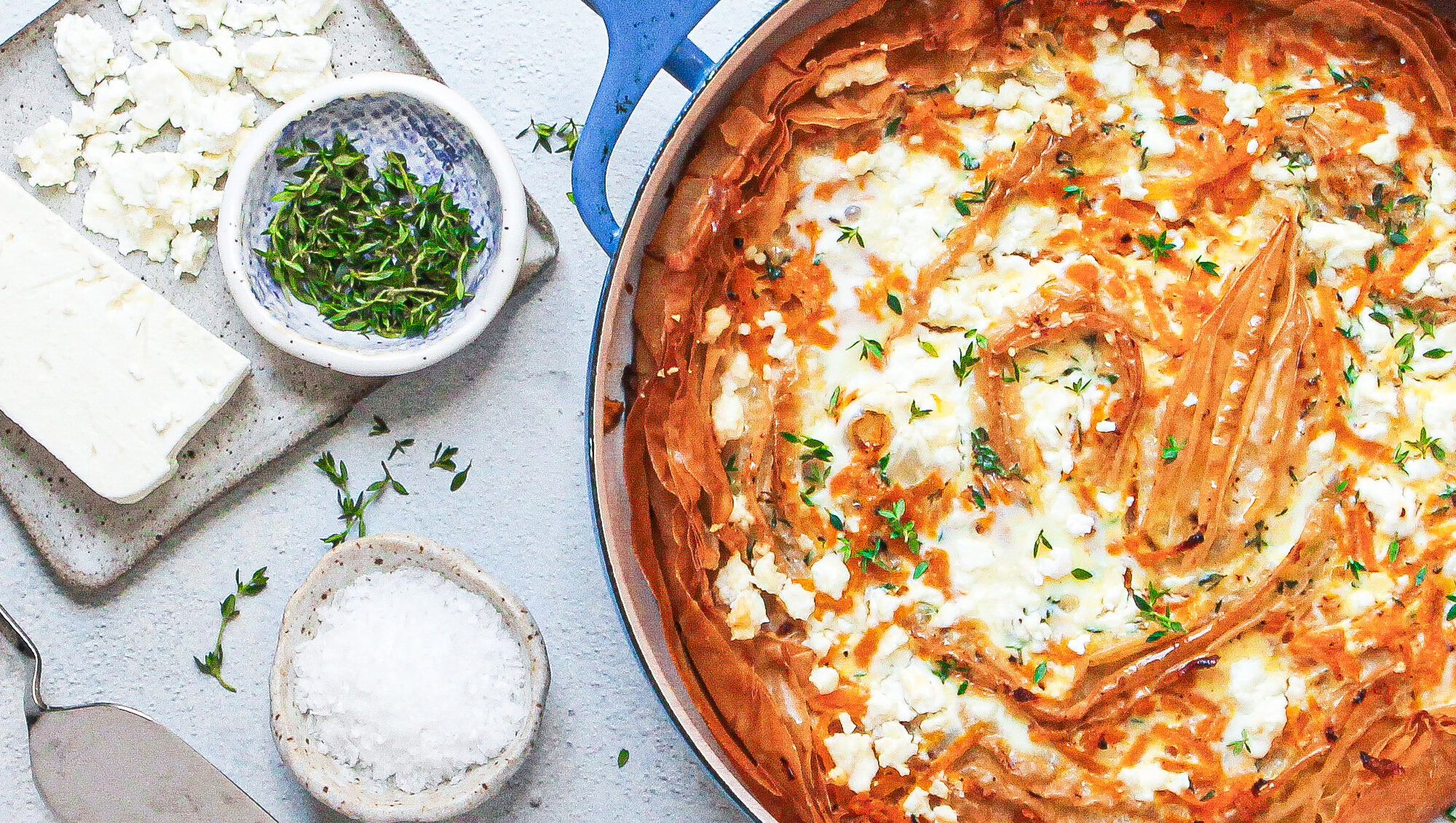
Squash and Feta Fillo Pie

Comforting, crunchy, buttery and salty are perfect words to describe our latest recipe! Warm up this November with our Squash and Feta Fillo Pie, featuring silky smooth butternut squash, flaky golden fillo and our premium feta cheese. Follow along for this family favourite in the making.

First off, start with thawed Krinos fillo sheets and also have a small saucepan with about 4 tbsp. of melted butter and a brush ready to go. Preheat your oven to 400°F. Gently unroll the fillo sheets onto a clean work surface and place a damp towel on top to prevent the fillo from drying out. It should be noted that fillo tends to dry out quickly so be prepared with all ingredients ready to go before you open the package to avoid this happening.

Line a 9-inch deep-dish pie plate, ceramic flan dish or similar vessel with 2 sheets of fillo stacked on top of each other. Brush with melted butter and repeat the process twice more, offsetting the fillo by a third each time and trim any overhang. You should have coverage of the bottom and sides of the dish. This should look comforting and rustic, so don’t worry about being perfect here!

On a clean work surface, arrange one remaining fillo sheet with the longest edge closest to you and pleat it accordion-style at about 1inch intervals. Repeat this with the last 2 sheets. Go back to your prepared dish and starting in the centre of it, coil one of the pleated strips from the middle of the dish outward, leaving about a half inch of space between the coiled rows. Take the next strip and start from the end of the first and continue moving outward. Repeat by taking the next strip and starting at the end of the last and you should see the coils cover the bottom of the dish by the end. Brush with remaining butter to get good coverage on the fillo and bake for 15-18 minutes or until golden and crisp. Set aside once cooked and keep your oven on. Now onto the fillings.

Coarsely grated squash is used for the filling, you can use a food processor, chopper, or box grater to achieve this, it will make it easier for the squash to become soft and luscious! In a medium skillet, combine the 1 ½ cups of grated butternut squash with ½ cup water and 1 tbsp of butter. Season with salt and pepper to taste (cayenne pepper if you like it spicy!) and simmer on low heat covered for 8-10 minutes until soft and set aside to cool.

Now onto the part that makes this super creamy and comforting! In a separate bowl, whisk together 5 eggs, 1 cup of half & half cream, ¼ tsp of ground nutmeg and 1 tbsp of chopped fresh or dried thyme, also season this mixture with salt and pepper to taste. With multiple fillings and layers it is important to season each step of the way to ensure maximum flavour throughout!

To assemble the finished pie, dollop the squash mixture between the fillo coils with a good coverage so you get squash in every bite! Then pour the egg mixture around to fill. Scatter with as much crumbled feta as you like – we like a lot! – and bake for 25 minutes or until set. When set, the egg mixture should no longer be liquid. Once baked through, let cool slightly to help filling set even further. Slice and enjoy!

This amazing Squash & Feta fillo Pie is a seasonal wonder, a comforting meal for a quick dinner but also exciting enough for entertaining. Definitely a must-try!

Click here to discover the recipe.